The Burgeoning Live Code Scene in New York City
TOPLAP featured the New York live coding community in this piece by May Cheung, examining how the scene has grown and what draws people to making music with code. The article surveyed 14 members of Livecode.NYC to understand how they discovered the practice and what keeps them engaged.
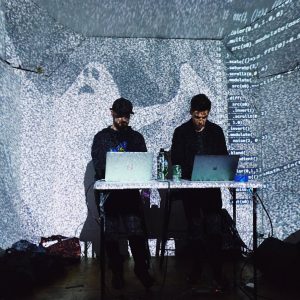
The numbers tell part of the story. Livecode.NYC started informally in 2016 with five people. By 2020, the community had nearly doubled in size twice—growth attributed to workshops, larger performances, and media coverage like the New York Times feature. But the more interesting story is how people find their way to live coding.
Eight of the fourteen surveyed members learned about it through friends. Four were inspired after attending algorave performances. One discovered it through online video, another through a School for Poetic Computation workshop. What they all shared was a willingness to recommend it to others.
The appeal varies. Melody Loveless, who uses Sonic Pi, values how it "enables expressing myself quickly and with minimal set-up." Charlie Kramer emphasizes creative control: "Live coding gives me ability to create sounds from scratch rather from someone else's prepackaged ideas." Maxwell Neely-Cohen offers a broader perspective: "All music is coding. Sheet music is one of original programming languages."
What struck me most about the article was the consistent mention of community support. Newcomers described feeling welcomed into a diverse and inclusive scene—something rare in tech spaces that often struggle with exclusionary practices. The live coding community in New York has managed to maintain openness as it grows, which is harder than it sounds.
The piece captures a particular moment in 2020 when the scene was expanding rapidly, before the pandemic forced everything online. It documents not just what live coding is, but why people are drawn to it and how communities form around shared creative practices.